Temporary RV Housing Resource Center
When a home becomes unlivable due to fire, storm damage, water loss, or major structural repairs, families often need stable temporary housing for several months. Hotels and short-term rentals may not provide the privacy, space, or long-term practicality required during extended insurance repairs.
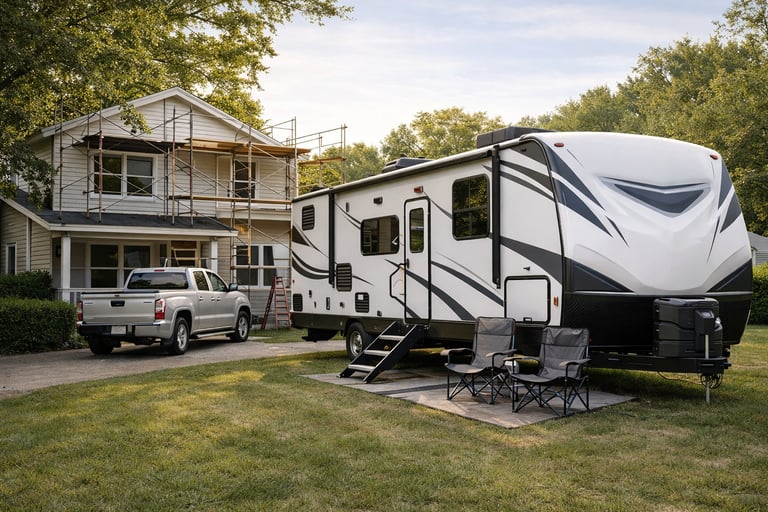
Temporary onsite RV housing allows homeowners to remain on their property while repairs are completed.
This resource center provides clear, practical information about how temporary RV housing works during insurance claims — including Additional Living Expense (ALE) coverage, placement requirements, rebuild timelines, and coordination during active construction.
RVOwnership and placement services are provided throughout North Carolina and expanding areas of South Carolina, with a focus on long-term insurance housing solutions.
Insurance & Additional Living Expense (ALE) Guidance
The following articles explain how insurance housing benefits work and how temporary RV housing is evaluated during a claim:
What Is Additional Living Expense (ALE) Coverage and How Does It Work?
Does Insurance Cover Temporary RV Housing During Home Repairs?
Real Examples of RV Housing During Repairs
Placement & Logistics During Repairs
Temporary RV housing requires coordination, including utility connections, safe placement, and access during active construction. Each property is different, and factors like electrical service, water access, and septic or sewer availability are evaluated before placement.
Proper setup helps ensure the RV can be used safely and comfortably throughout the rebuilding process. RVHousingPros can help walk you through these considerations based on your property, in coordination with your contractor or project team.
Serving North Carolina and South Carolina
Temporary RV housing placements are structured for long-term insurance displacement — not vacation rentals. Delivery and setup are handled with consideration for construction access, utility requirements, and rebuild timelines common throughout North Carolina and parts of South Carolina.
For location-specific service information, visit:
Temporary RV Housing — Done Right.
Helping displaced homeowners across the Carolinas.

© 2016–2026 RVHousingPros | Legal & Privacy