
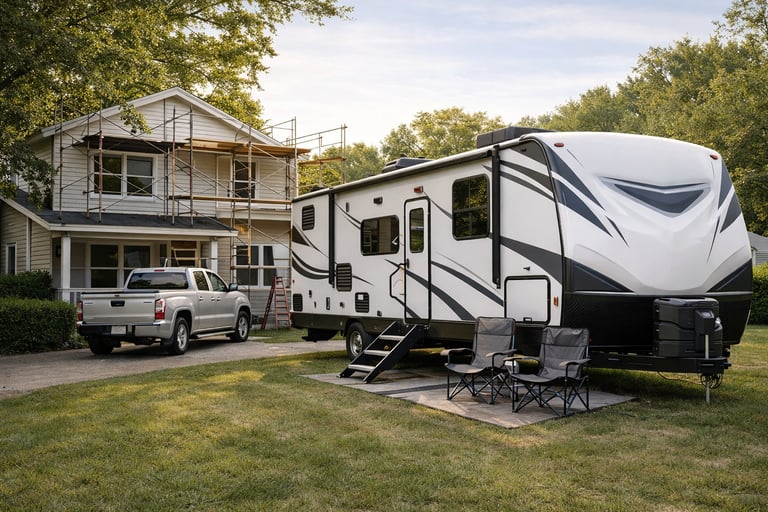
Does Insurance Cover Temporary RV Housing During Home Repairs?
When your home is sustains hurricane damage or damage by fire, storm, or a covered flood loss, one of the first questions is: Where do you live during repairs?
Most homeowners assume a hotel or rental is the only option. In most cases, however, temporary RV housing can be approved and covered by insurance—especially for rural properties, longer rebuilds, or situations involving pets. This article explains how it works, when it’s approved, and what to expect.
What Is Loss of Use (ALE) Coverage?
Most homeowners insurance policies include Additional Living Expenses (ALE), also called Loss of Use coverage.
This coverage is designed to pay for reasonable increases in living costs when your home is uninhabitable due to a covered claim.
Typically, ALE may cover:
Temporary housing (hotel, rental, or alternative setup)
Increased food costs
Laundry and day-to-day living expenses
Utility differences
The purpose of ALE is to maintain a reasonable standard of living during the repair process.
Can Insurance Cover Temporary RV Housing?
Yes—RV temporary housing solutions can be covered under ALE.
Approval is not automatic. Insurance carriers evaluate whether the setup is reasonable, necessary, and cost-effective compared to other housing options.
Adjusters will typically consider:
Total cost versus hotel or rental alternatives
Expected duration of repairs
Property layout and accessibility
Availability of local housing
If the RV option is practical and comparable in cost, it is often approved.
When RV Housing Is a Strong Option
Temporary RV housing in North Carolina is most commonly approved in situations like:
Rural or Limited Housing Areas
In rural locations, nearby hotels or rentals may be limited or impractical. Staying on-site can be the most efficient option.
Homes With Pets
Extended hotel stays with pets can be restrictive or expensive. An RV allows families to remain together without added complications.
Long Repair Timelines
Major fire or structural damage can take several months to repair. Long-term hotel use can become costly and disruptive.
Preference to Stay on the Property
Some homeowners choose to remain on-site to monitor progress, coordinate with contractors, and maintain normal routines.
What Costs May Be Covered?
When approved, ALE can include the full setup required for temporary RV living, such as:
RV rental or unit placement
Delivery and setup
Electrical, water, and sewer connections
Temporary utility solutions
Septic service or scheduled pump-outs
Coverage depends on the policy, but the total cost is typically evaluated against the cost of alternative housing over the same period.
How to Improve Approval Chances
Approval often depends on how the option is presented to the insurance carrier.
Key factors that help:
Provide a Clear Cost Comparison
Show the projected cost of an RV setup alongside hotel or rental costs over the expected timeline.
Explain Why It Fits the Situation
Factors like rural location, pets, or extended timelines help justify the request.
Confirm the Property Can Support It
The site must allow for safe placement, delivery access, and basic utility solutions.
Discuss It Early in the Claim
Present the option before long-term housing arrangements are finalized.
Common Questions
Can I choose an RV instead of a hotel?
In many cases, yes—if it is approved as a reasonable alternative under ALE.
Are utilities included?
They are often covered if they are part of the temporary living setup.
What if my property doesn’t have hookups?
Temporary solutions such as generators, water tanks, and septic service are commonly used.
Is RV housing commonly used?
It is less common than hotels, but widely used in the right scenarios—especially in rural areas.
Key Takeaway
Temporary RV housing can be covered by insurance during home repairs when it is a practical and cost-effective alternative to traditional housing.
For many homeowners, it provides:
The ability to remain on their property
Less disruption during the repair process
A flexible option for longer claims
Talk Through Your Situation
Every claim and property is different.
RVHousingPros can help you evaluate whether temporary RV housing makes sense for your situation and work alongside your contractor and adjuster to ensure everything is set up properly.
Temporary RV Housing — Done Right.
Helping displaced homeowners across the Carolinas.

© 2016–2026 RVHousingPros | Legal & Privacy